1976
Origins
Gremlin's arcade game Blockade put two players on a shared grid, each leaving a solid, lethal trail. The single-player descendant — eat, grow, avoid yourself — appeared across 1980s home computers under names like Worm and Nibbler. By 1990 the mechanic was folklore: everyone had played a version, nobody agreed on its name.
1997
Development
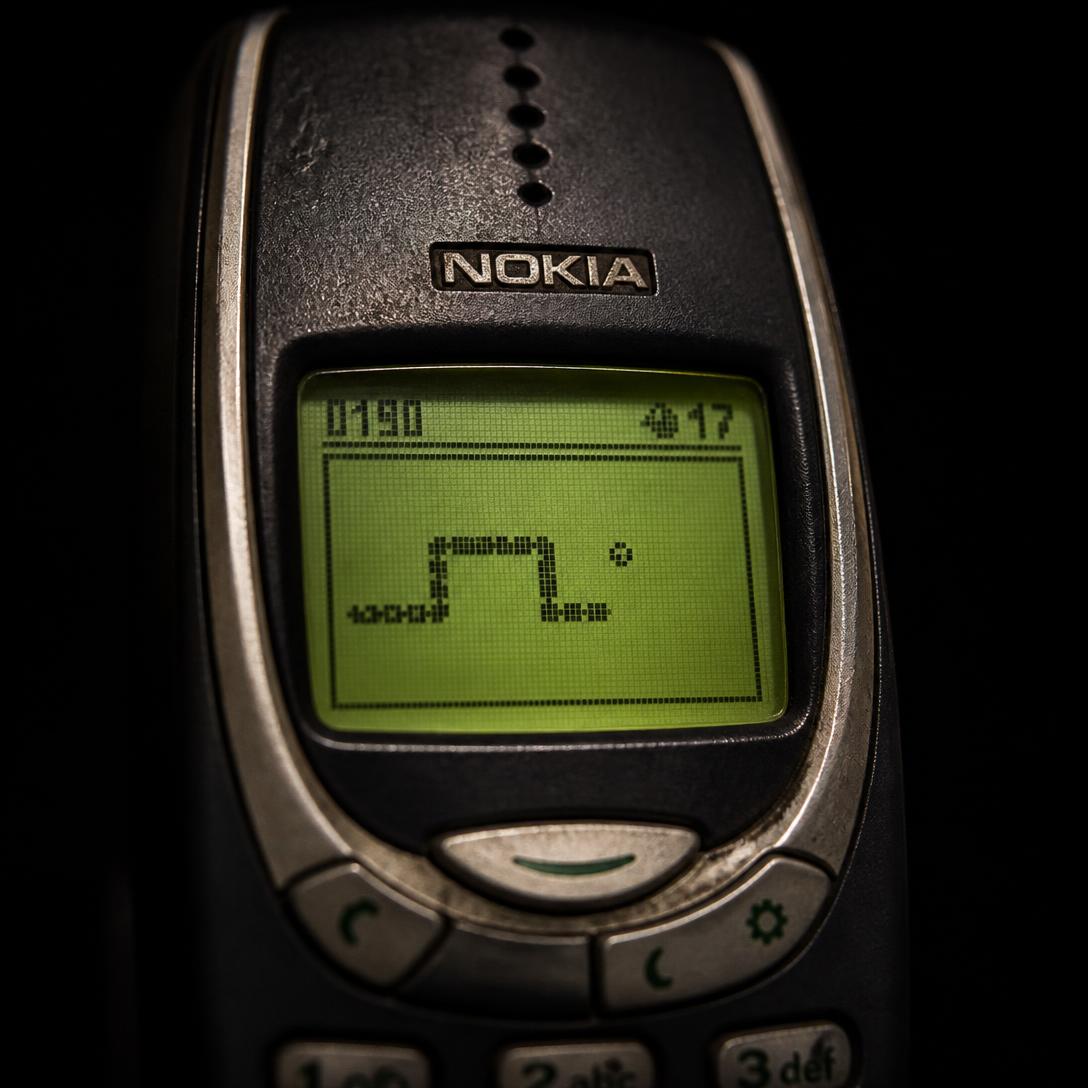
I designed and programmed Snake for the Nokia 6110 inside the limits of a monochrome display of roughly 84×48 pixels and a memory budget of kilobytes. The design decisions that followed from those limits — no menus, no levels, one thumb — are the reason the game is still legible today.
1997–2005
The Nokia era
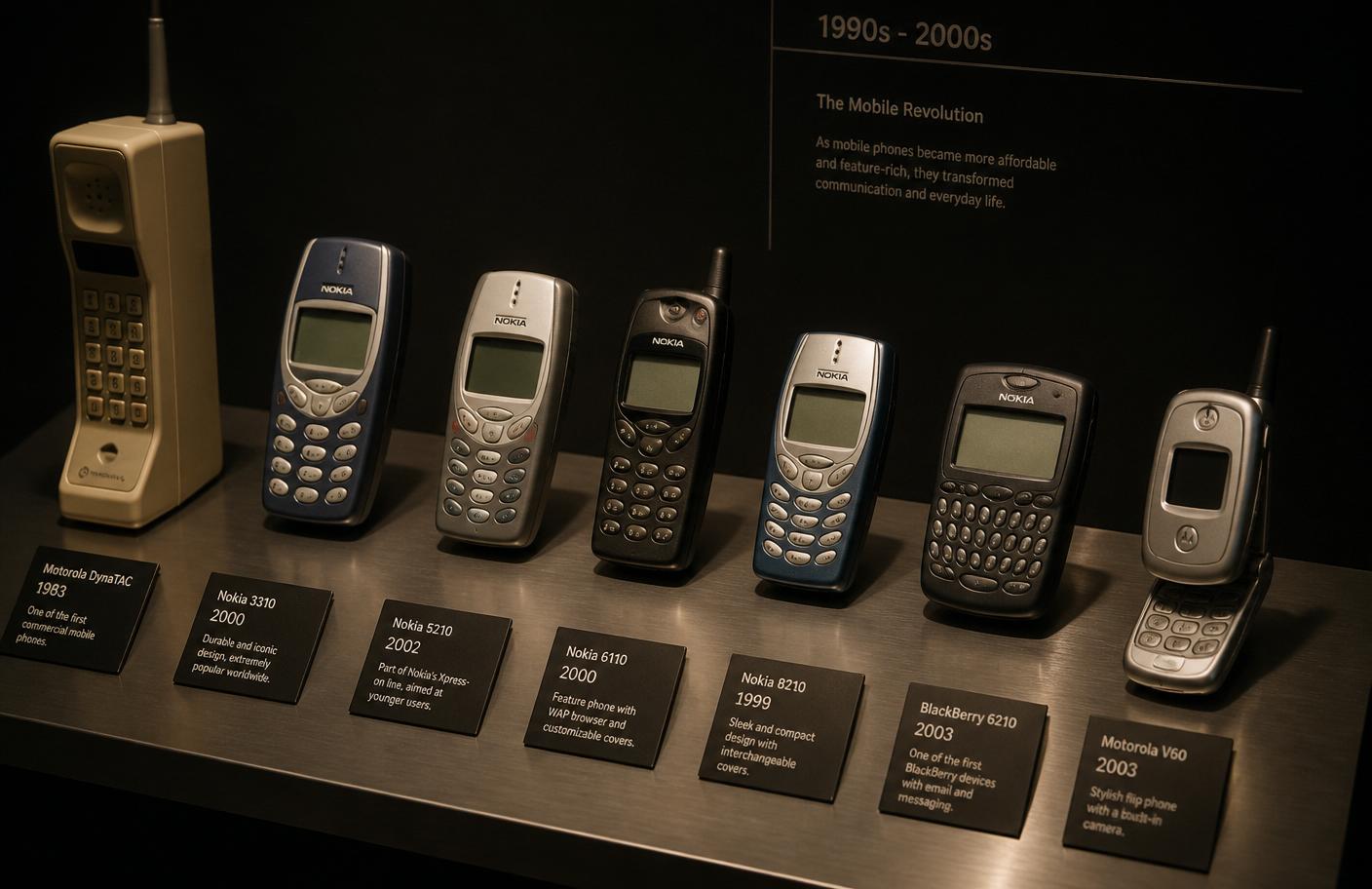
Snake shipped preinstalled, unbranded and free, across a widening range of Nokia handsets: the 6110, then the 3210, 3310, 8210 and beyond. There was nothing to buy and nothing to install, so effectively every owner was a player.
2000s
Worldwide popularity
By distribution, Snake became one of the most widely available video games ever made. It crossed languages and income brackets because it required no reading, no manual and no purchase — an accidental masterclass in accessibility.
Legacy
Influence on gaming
Snake normalised the ninety-second play session and the instant restart. Every hypercasual mobile hit since inherits that behavioural template, whether or not its designers have ever thought about a Nokia 6110.
2000s–2015
Evolution over time
Snake II added mazes and portals; later handsets shipped colour and 3D versions built by other teams. In 2015, Snake Rewind — released with my involvement and published by Rumilus Design — reworked the design for touchscreens, adding the ability to resume from a death.
Today
Modern versions and legacy
Massively multiplayer .io variants turned rival players into the walls, while browser projects — including OGSnake.world, featured on this site — return the game to instant, install-free access. The rules have not needed a revision in fifty years.