Complete guide
Nokia Snake, explained by the engineer who wrote it
I designed and programmed Snake for the Nokia 6110 in 1997. This is the reference page: which handsets carried it, how each variant differed, why 84×48 pixels shaped every design decision, and what the game left behind in mobile gaming.
The short answer
What Nokia Snake is
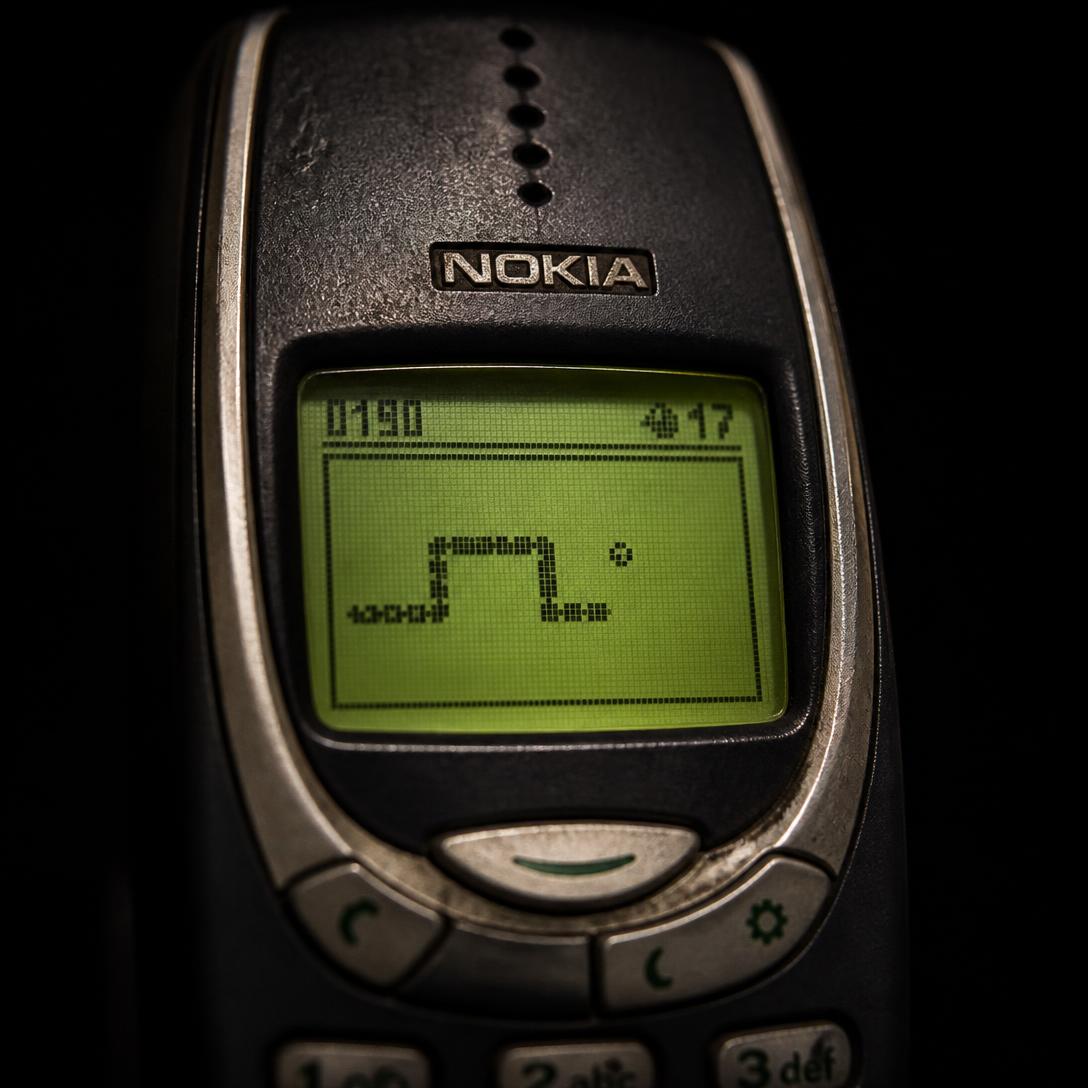
Nokia Snake is the version of the classic Snake game that Nokia shipped preinstalled on its mobile phones from 1997 onwards. I wrote it while working as an engineer at Nokia Mobile Phones in Finland, starting with the Nokia 6110. There was nothing to buy and nothing to install, so in practice every owner of the phone was a Snake player.
The genre is older than my implementation — it descends from arcade machines of the 1970s — but the Nokia version is the one that turned a phone into something you play. That distinction matters, and I keep it explicit everywhere on this site.
Engineering
Designing inside 84×48 pixels
The Nokia 6110's display was a monochrome grid of roughly 84×48 pixels, and the software budget was measured in kilobytes. Those two numbers wrote the design brief for me:
- No menus or tutorials. Every byte spent on explanation was a byte not spent on the game.
- No designed levels. Difficulty had to be generated at runtime, so the player's own growing tail became the obstacle course.
- One thumb, four keys. The numeric keypad was the only input device, and the game had to be playable while standing at a bus stop.
- One score. A single stored high score gave the loop a reason to repeat without any persistence system worth the name.
I explain my thinking in more depth in my design philosophy essay, and the same constraints are why I still believe short-session mobile play works best when the first move happens within a second.
Handsets
The phones that carried Snake
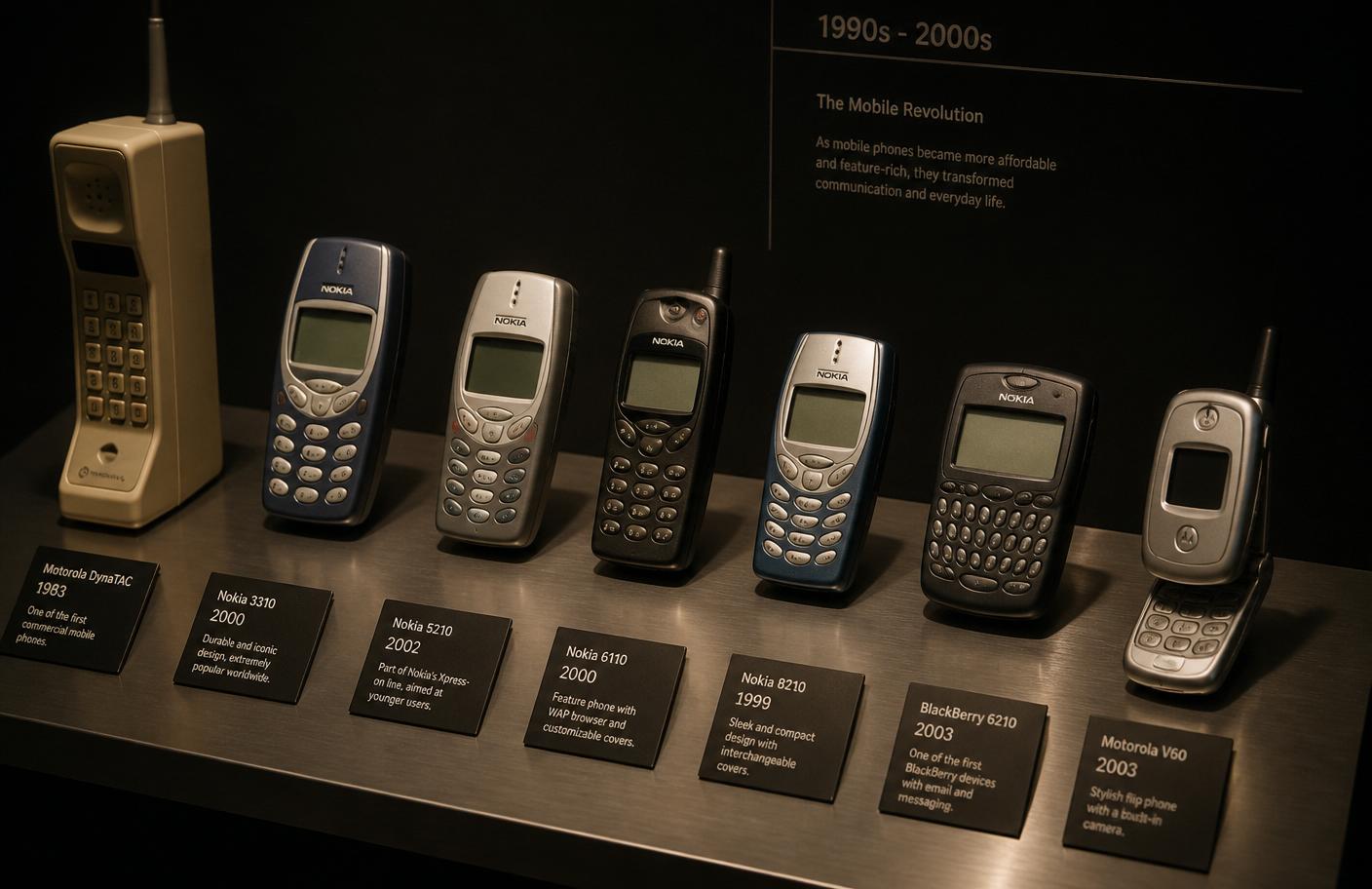
Snake shipped, free and unbranded, across a widening range of Nokia feature phones: the 6110 in 1997, then the 5110, the 3210 in 1999, the 8210, and — most famously — the Nokia 3310 in 2000. Distribution, not marketing, made it one of the most widely available video games ever released.
Variants
Every Snake version, in order
- Snake (1997)
- Nokia 6110, 5110, 3210, 3310, 8210
- The original I wrote: one grid, one high score, four keys, instant restart.
- Snake II (2000)
- Nokia 3310, 3330, 6210 and later
- Added mazes, portals through the screen edges and different food values.
- Snake Xenzia
- Series 40 feature phones
- The Series 40 branding of the same core loop, with selectable speed and mazes.
- Snakes (3D, 2005)
- Series 60 smartphones
- A colour, three-dimensional reinterpretation built by other teams at Nokia.
- Snake Rewind (2015)
- iOS and Android
- My return to the design for touchscreens, published by Rumilus Design.
Questions
Nokia Snake FAQ
- Who created Nokia Snake?
- I did. I am Taneli Armanto, a Finnish engineer at Nokia Mobile Phones, and I designed and programmed the Snake game that shipped preinstalled on the Nokia 6110 in 1997.
- Which Nokia phone had Snake first?
- The Nokia 6110, released in 1997, was the first handset to ship with my Snake. The game then spread across the Nokia range, including the 3210, 3310 and 8210.
- Did Nokia invent the Snake game?
- No. The snake-game genre goes back to 1970s arcade machines such as Gremlin's Blockade (1976) and 1980s home-computer worm games. What Nokia shipped — and what I wrote — was the implementation that hundreds of millions of people actually played.
- How big was the original Snake screen?
- Roughly 84×48 monochrome pixels, with the game logic running in a memory budget measured in kilobytes. Those constraints produced the design: no menus, no levels and no loading.
- Can you still play the original Nokia Snake?
- The original runs on the original hardware. In a browser, modern recreations such as OGSnake.world keep the same instant-play loop; I describe that project only as its own official channels describe it.